
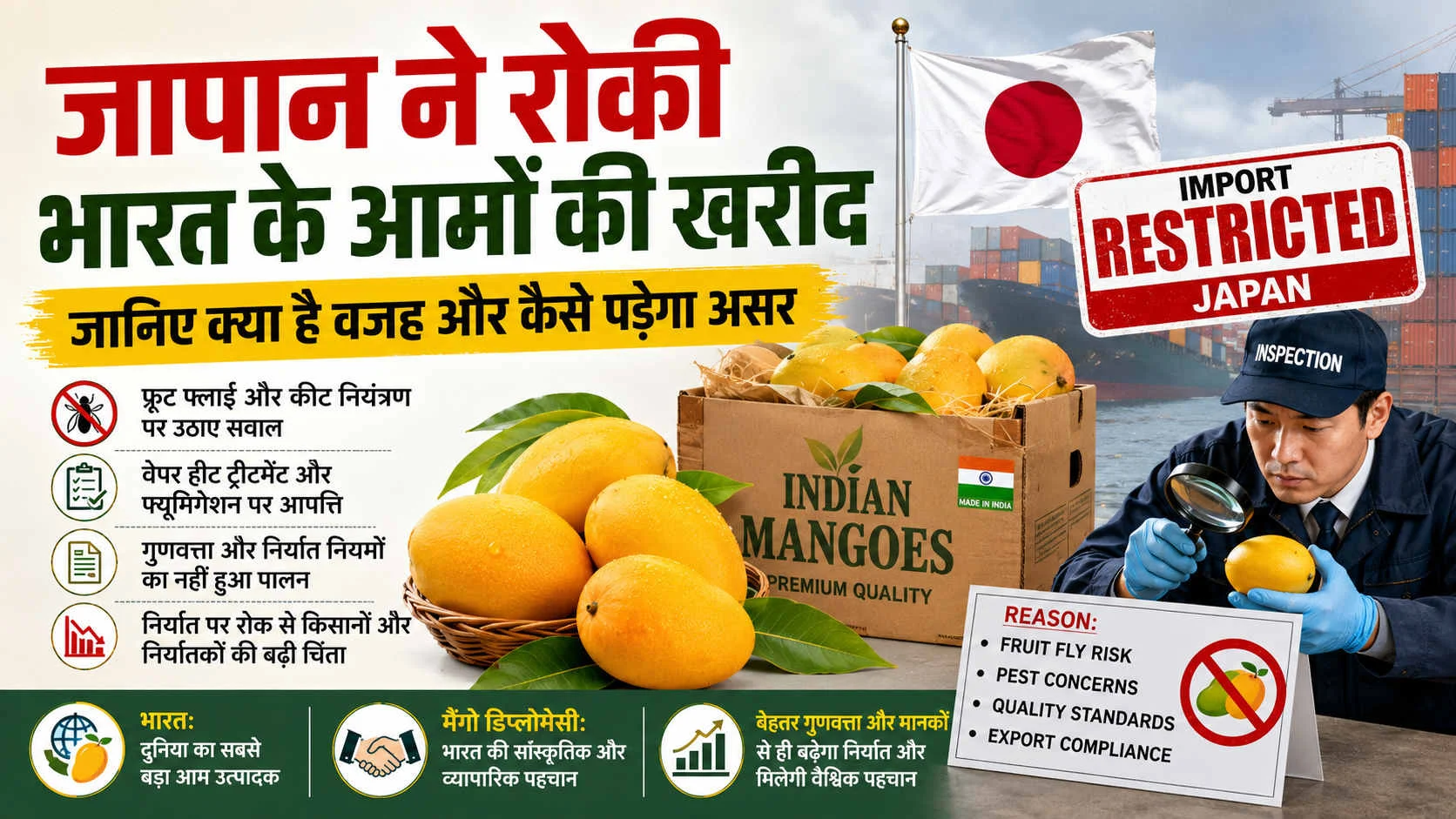
Japan Stops Import of Indian Mangoes, Know the Reason and Impact
agri-business
Japan’s restriction on Indian mango imports has raised concerns in the agricultural export sector.
Khetiwadi TeamUpdated 2 June 20264 min read10 views
Page is loading…
Please wait
Japan has temporarily restricted the import of Indian mangoes due to concerns related to quality standards, pest control, and export compliance. The decision has raised concerns among Indian farmers and exporters involved in the agricultural export sector.
Indian mangoes are globally popular for their sweetness and premium quality. Varieties such as Alphonso, Kesar, Dasheri, Langra, Totapuri, and Neelam are widely recognized in international markets. Recently, Prime Minister Narendra Modi also mentioned mangoes during his “Mann Ki Baat” program, bringing renewed attention to India’s mango diplomacy and export potential.
India is considered the world’s largest mango producer, with annual production of nearly 25 million tons. Uttar Pradesh and Andhra Pradesh are among the leading mango-producing states. Despite this massive production, India exports only a limited quantity of mangoes globally.
According to reports, Japanese authorities raised concerns regarding India’s vapor heat treatment and fumigation processes. During inspections, issues related to fruit flies and quality control were reportedly identified at some export centers.
Japan is known for maintaining strict food safety and pest-control regulations. Due to non-compliance with certain export standards and documentation procedures, the import of Indian mangoes was temporarily restricted.
Experts believe India must strengthen pest management systems, improve hygiene at export facilities, enhance fumigation practices, and maintain better documentation standards to avoid similar restrictions in the future.
The situation is also seen as a warning for Indian agricultural exporters, as competing countries like Bangladesh and Pakistan may strengthen their presence in global mango markets if India fails to improve export quality standards.
Experts have also advised consumers to remain cautious about chemically ripened mangoes. Carbide-ripened mangoes may cause health issues, so buyers should check aroma, softness, and cleanliness before consumption.
Indian mangoes are not just fruits but also an important symbol of India’s agriculture, culture, and international trade relations. With better export practices and compliance standards, India can further strengthen its position in the global mango market.
Japan restricted Indian mango imports due to concerns related to fruit flies, quality standards, and export compliance.
India produces nearly 25 million tons of mangoes every year and is considered the world’s largest mango producer.
Mango Diplomacy refers to strengthening cultural and trade relations with other countries through Indian mango exports and gifting.
Quality control, pest management, fumigation, and compliance with international export standards are major challenges in Indian mango exports.
Carbide-ripened mangoes often appear overly yellow from outside but may remain raw inside and usually lack natural aroma.
Tags
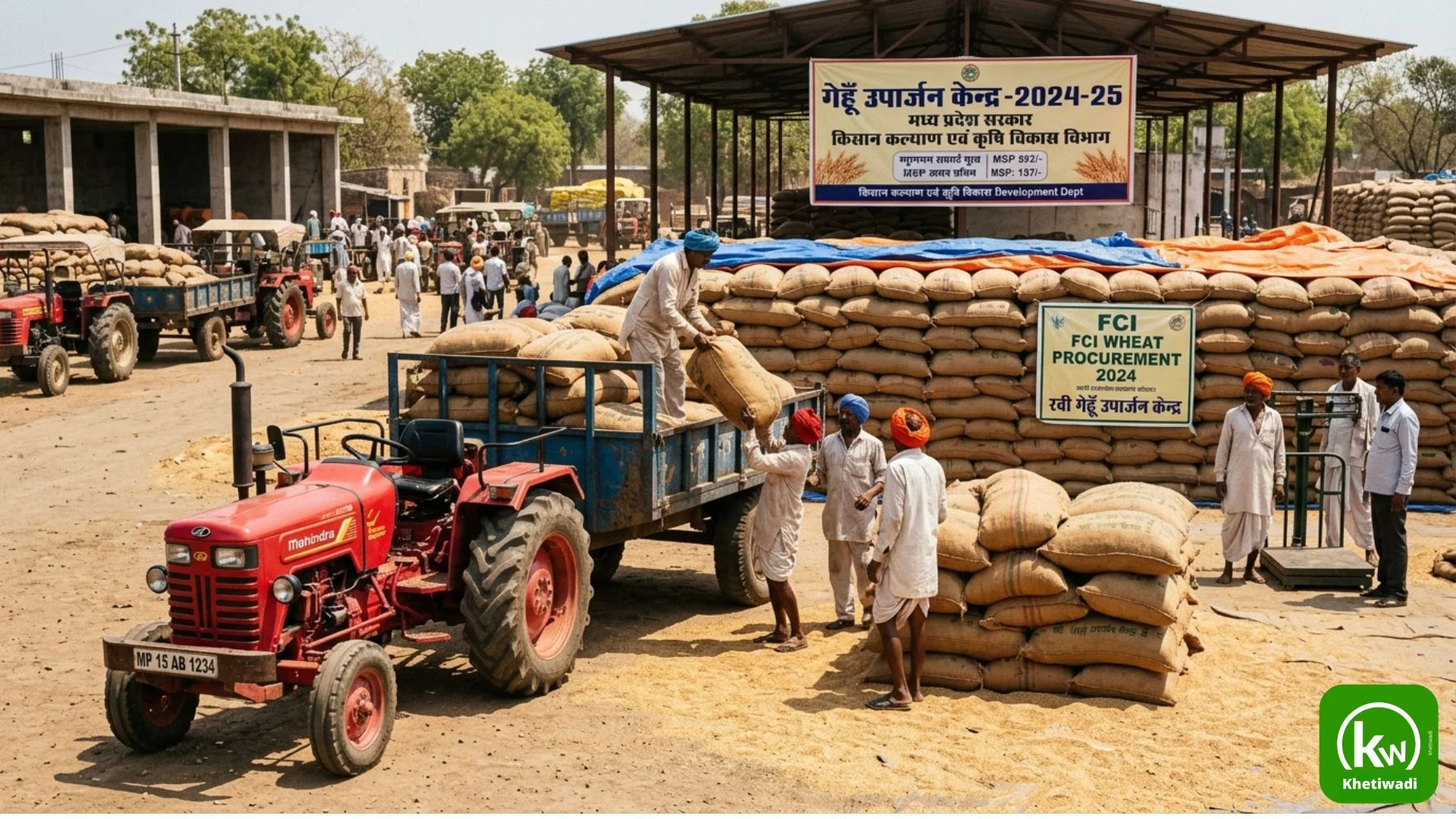
मध्यप्रदेश में रबी विपणन वर्ष 2026 के लिए भोपाल, इंदौर, उज्जैन और नर्मदापुरम संभागों में 1 अप्रैल से गेहूं की सरकारी खरीदी शुरू होगी। किसानों को MSP पर फसल बेचन
पढ़ें →
भारत में नैनो उर्वरक तेजी से लोकप्रिय हो रहे हैं, जो किसानों को बेहतर उत्पादन और पर्यावरण संरक्षण के लाभ दे रहे हैं।
पढ़ें →
रूस ने उर्वरक निर्यात पर प्रतिबंध लगा दिया है, वहीं होरमुझ जलडमरूमध्य में तनाव के कारण वैश्विक कृषि आपूर्ति श्रृंखला पर गंभीर संकट मंडरा रहा है। भारतीय किसानों
पढ़ें →
मध्य प्रदेश में इस साल सामान्य से कम बारिश होने की संभावना जताई जा रही है। अल-नीनो प्रभाव के कारण मानसून कमजोर रह सकता है।
पढ़ें →